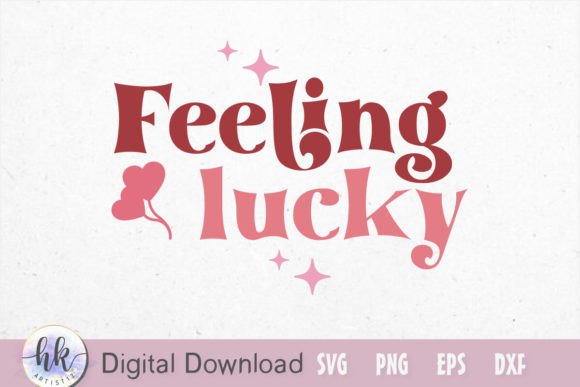
Feeling Lucky Retro SVG for Graphics and Crafts
I recently received a brief from a client who owns a boutique handmade brand launching a limited Valentine's Day collection. They needed visual assets that felt nostalgic, approachable, and slightly playful without looking cheap or overly generic. The mood board they shared leaned heavily into mid-century aesthetics with warm tones and textured typography. When I started sourcing digital design assets, my eyes landed on the Feeling Lucky Retro SVG. As a professional designer who works daily with branding, marketing visuals, and print-on-demand products, I immediately began evaluating whether this specific graphic could elevate their project or if it would clash with the desired visual hierarchy.
The first impression of Feeling Lucky Retro SVG is undeniably charming. It captures a distinct retro vibe that feels authentic rather than forced. Unlike many modern flat illustrations that can feel sterile, this piece carries a sense of warmth and personality. It naturally fits projects that require an emotional connection, such as seasonal campaigns, Etsy product launches, or packaging designs for small business branding. The style suggests a time when luck was celebrated with optimism, making it perfect for creating a welcoming atmosphere in editorial design or social media graphics.
Real-World Application in Client Projects
In the context of the client's new line, I envisioned using this asset as a hero graphic for their website homepage. Its bold presence allows it to anchor a layout effectively, drawing the eye immediately. However, its versatility extends far beyond just web banners. For a craft-based business, this SVG design serves as a foundational element for various commercial design assets. Imagine placing it on a tote bag mockup, embossing it onto a greeting card, or using it as a central motif for a sticker design collection.
The file structure provided—comprising EPS, SVG, PNG, and DXF formats—is a critical factor in my decision-making process. The inclusion of an SVG file means the vector paths are fully editable, allowing me to scale the artwork to any size without losing resolution. This is essential for large-format printing like posters or flyers where crisp edges are non-negotiable. The 300 DPI PNG version with a transparent background is equally valuable. It allows for quick placement in Canva templates or Photoshop compositions where layering over complex backgrounds is necessary. Having a DXF file also opens doors for Cricut projects, enabling precise cutting for physical merchandise like vinyl decals or custom t-shirt designs.
Strategic Placement and Visual Hierarchy
When integrating Feeling Lucky Retro SVG into a brand identity, placement matters significantly. It performs best in large layout areas where it can breathe, serving as a decorative accent that reinforces the theme. In a packaging design scenario, it could act as a seal or a label detail that adds character to the box. For marketing visuals, it works well as a supporting element in Instagram posts or Pinterest pins, adding a touch of whimsy to promotional content.
However, there are scenarios where this asset requires careful handling. If the client's brand relies on strict minimalist principles or corporate professionalism, this retro illustration might feel too casual. In crowded layouts, the intricate details of the design could become muddy if the surrounding text is too dense. Similarly, on very small sizes, such as a favicon or a tiny mobile icon, the nuances of the retro style may be lost. Designers must ensure that the contrast remains high enough for readability, especially if the graphic is placed on a dark or patterned background.
Technical Review and Practical Designer Notes
Beyond the aesthetic appeal, a professional review demands a technical check. Before committing to using this asset in a paid client project, I always test the design in black and white. This ensures that the form holds up even without color, which is crucial for applications like laser engraving or single-color screen printing. I also preview the file at both extreme small and large scales to verify that the lines do not break or become jagged.
Inspecting the transparency of the PNG file is another step I never skip. A clean cutout ensures that the graphic blends seamlessly into any composition without unsightly white boxes. Furthermore, checking the editability of the SVG is vital. I open the file in Adobe Illustrator to confirm that all elements are grouped logically and that the curves are smooth. This makes it easy to adjust colors to match a specific brand palette, ensuring brand consistency across all deliverables.
Typography pairing is also a key consideration. This retro graphic pairs beautifully with display fonts that share a similar vintage spirit. However, designers should avoid cluttering the design by mixing too many script or handwritten fonts. A clean sans-serif font often provides the best balance, grounding the playful nature of the illustration with modern clarity. Always compare the chosen font styles to ensure they complement rather than compete with the main graphic.
Licensing and Commercial Viability
For any designer working with real clients, the commercial license is the final gatekeeper. Even if the design looks perfect, it cannot be used for profit unless the terms explicitly allow for commercial use. Most marketplaces provide clear licensing information, but it is always wise to read the fine print regarding sublimation design usage and resale rights. Confirming these details protects both the designer and the client from potential legal issues.
This creative design asset is particularly strong for handmade businesses and small business branding. It offers a cost-effective way to create a cohesive look across multiple channels, from digital ads to physical product mockups. Whether you are designing a printable wall art series, creating a set of stickers, or building a full brand identity, Feeling Lucky Retro SVG provides a reliable foundation. Its ability to convey nostalgia and fun makes it a versatile tool in the hands of a skilled creator.
In conclusion, after rigorous testing and strategic planning, I recommend this asset for projects aiming to evoke a sense of joy and retro charm. It is a robust addition to any library of design assets, offering flexibility and high quality. By understanding its strengths and limitations, designers can leverage Feeling Lucky Retro SVG to produce polished, professional results that resonate with audiences and meet client expectations.